 Build AI CV
What a UK CV looks like
In the UK, it is called a "CV" (curriculum vitae).
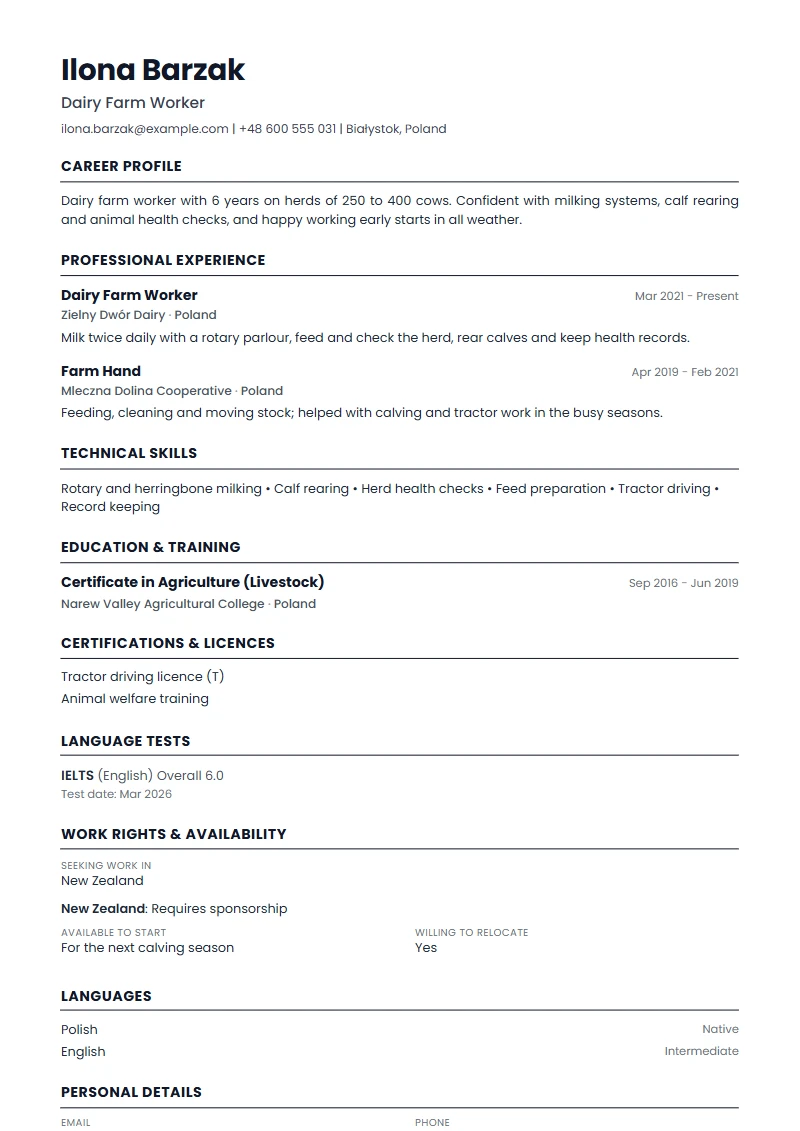
- Usually no more than 2 A4 pages. This is common advice, not a rule.
- A clear font such as Arial or Calibri, in size 11 or bigger.
- Headings and bullet points, so it is easy to read.
CV tip: Use UK spelling, for example "organise", "colour" and "licence".
What to include, in order
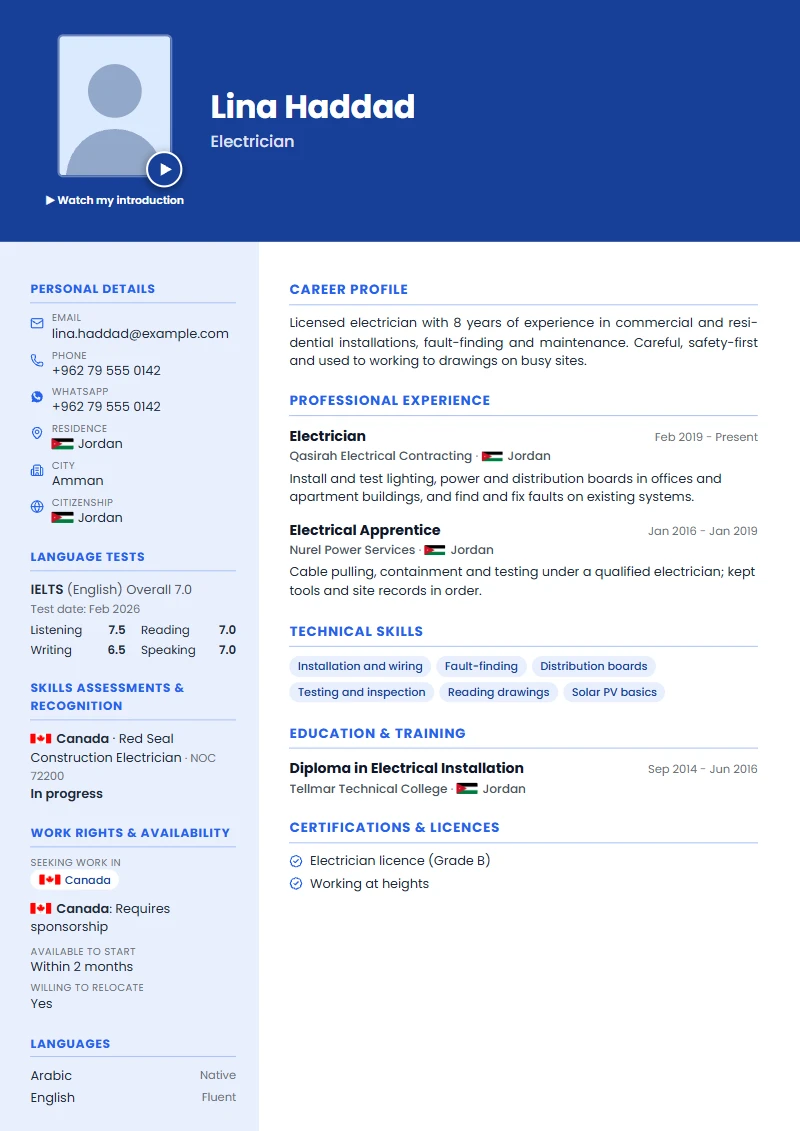
- Contact details: your name, phone number, email address and a LinkedIn link if you have one.
- Personal statement: a few short lines just under your name and contact details. Say who you are and what you want to do.
- Work history: most recent job first. For each job give the employer, your job title, the dates and 2 to 3 lines about what you did.
- Education: the names of your qualifications, where you studied and the dates.
What to leave out
Why? The Equality Act 2010 protects people from discrimination because of age, marriage or civil partnership, race (including nationality) and other characteristics. Employers must follow this law when they advertise jobs, interview and choose new staff.
The Equality and Human Rights Commission tells employers that a name and contact details are usually all the personal information they need at the application stage.
This is advice for candidates, not a ban. But leaving these details out is normal in the UK.
- Your age, date of birth, marital status and nationality. The National Careers Service says not to include them.
- A photo, unless you are applying for acting or modelling work.
Your right to work (in general)
UK employers must check that you are allowed to work for them before they employ you.
If you are not a British or Irish citizen, you usually prove your right to work online with a share code. The employer uses it to check your status.
Your right to work is not the same as your nationality. You do not need to write your nationality on your CV.
CV tip: Add one factual line, for example "Right to work in the UK: [your status]" or "Will require visa sponsorship". Write only what is true for you.
Registration for nurses and other health jobs
To work in many health jobs, and some social care jobs, you must join the right UK professional register before you start work.
Nurses and midwives register with the Nursing and Midwifery Council (NMC). If you trained outside the UK, you take the NMC test of competence, and you must show that your English is good enough.
Allied health professionals register with the Health and Care Professions Council (HCPC), which has its own route for people trained outside the UK. Doctors, dentists and pharmacists have their own regulators.
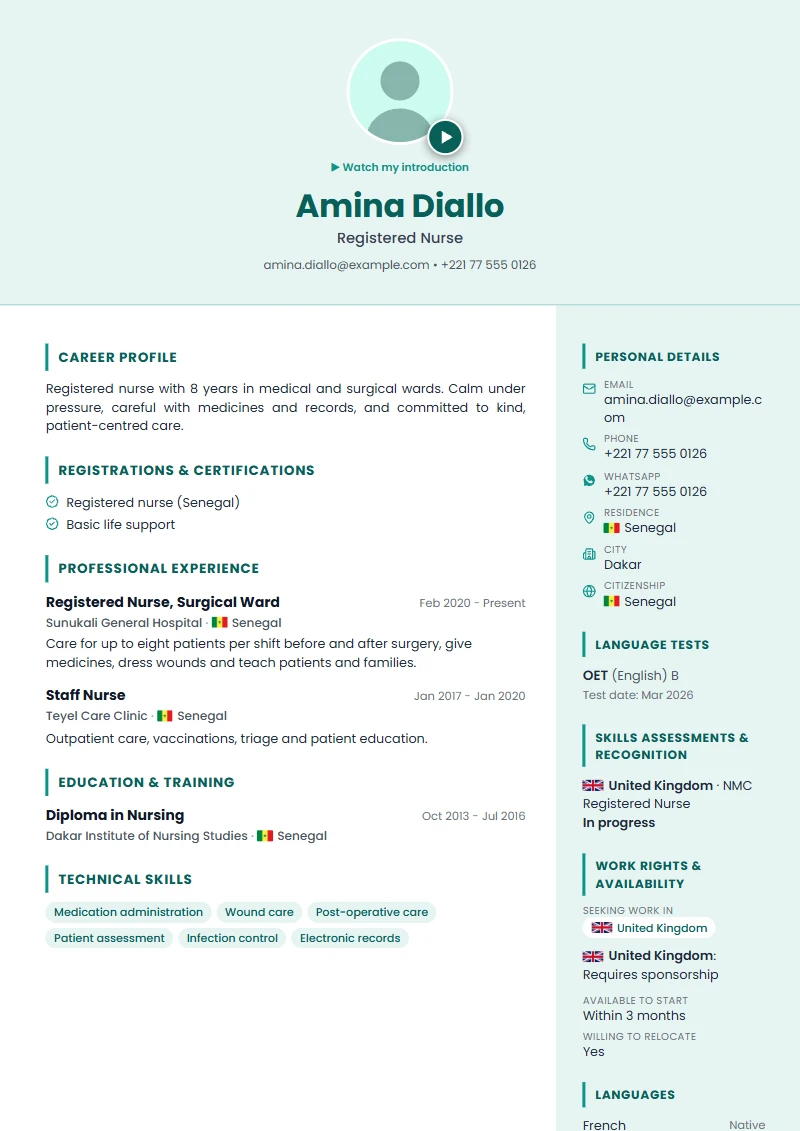
CV tip: Show your registration status in one clear line, for example "Registered Nurse (Philippines). NMC application in progress" or your NMC or HCPC number once you have it.
Visas and English: check gov.uk
The Skilled Worker visa lets you work in the UK for an approved employer in an eligible job. The employer gives you a certificate of sponsorship.
The rules changed in 2025 and 2026. For example, from 22 July 2025 the visa route for care workers and senior care workers closed to new applications from overseas. Always check gov.uk for the current rules.
Many visa applicants must prove their knowledge of English. How to prove it is explained on gov.uk.
Overseas qualifications
UK ENIC is the official organisation for the recognition and comparison of international qualifications. Its Statement of Comparability shows how your qualification compares with the UK education system. You can show it with your original certificate when you apply for jobs.
CV tip: Write the original name of your qualification, then add the comparison if you have it, for example "BSc Nursing, [university], Philippines. UK ENIC: comparable to [UK level]".
Tailoring, references and cover letter
- Change your CV for each job. Show the skills the employer asks for.
- Do not put your referees' contact details on your CV. You can write "References available on request". Employers usually expect this anyway, so you can leave the line out if you need space.
- Write a new cover letter for each job. It is usually 3 to 5 short paragraphs.
- Gaps between jobs are normal. Life events happen.
Watch out for recruitment scams
- gov.uk warns: do not pay money to UK-based agencies to find you work in the UK.
- Be careful with job offers that ask you to pay fees that the employer should pay, such as visa or sponsorship costs.