 Build AI CV
What New Zealand employers want
Employers may have many CVs to read and not much time. Your CV needs to show quickly and clearly how you match the job and why they should interview you.
- Update your CV for each job, using information and keywords from the job ad.
- Choose a work-focused CV if you have work experience, or a skills-focused CV if you have little experience or gaps in your work history.
- Your CV may go through an applicant tracking system (ATS): software that searches and ranks CVs. Use words from the job ad, such as the job title, key skills and the tools you use.
Length and layout
- Keep your CV to 2 pages if you can.
- Use a plain black font, like Calibri 11.
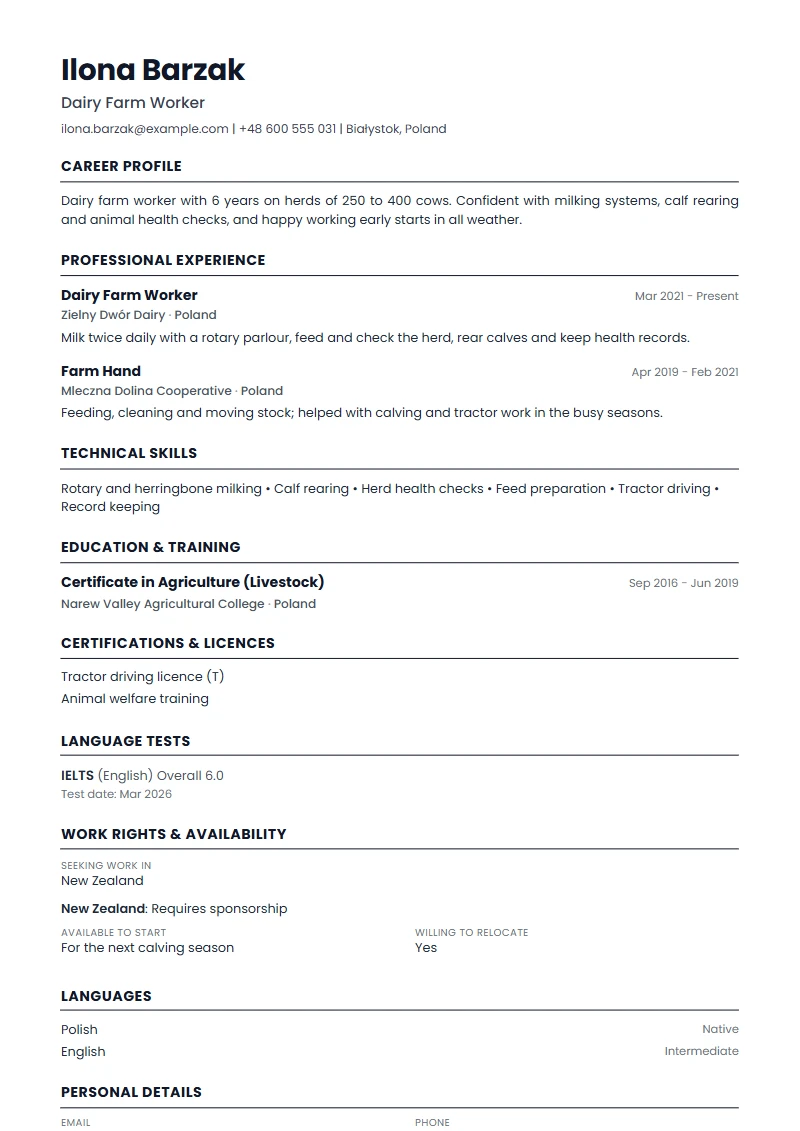
- Use bullet points, short sentences, larger bold headings and lots of white space.
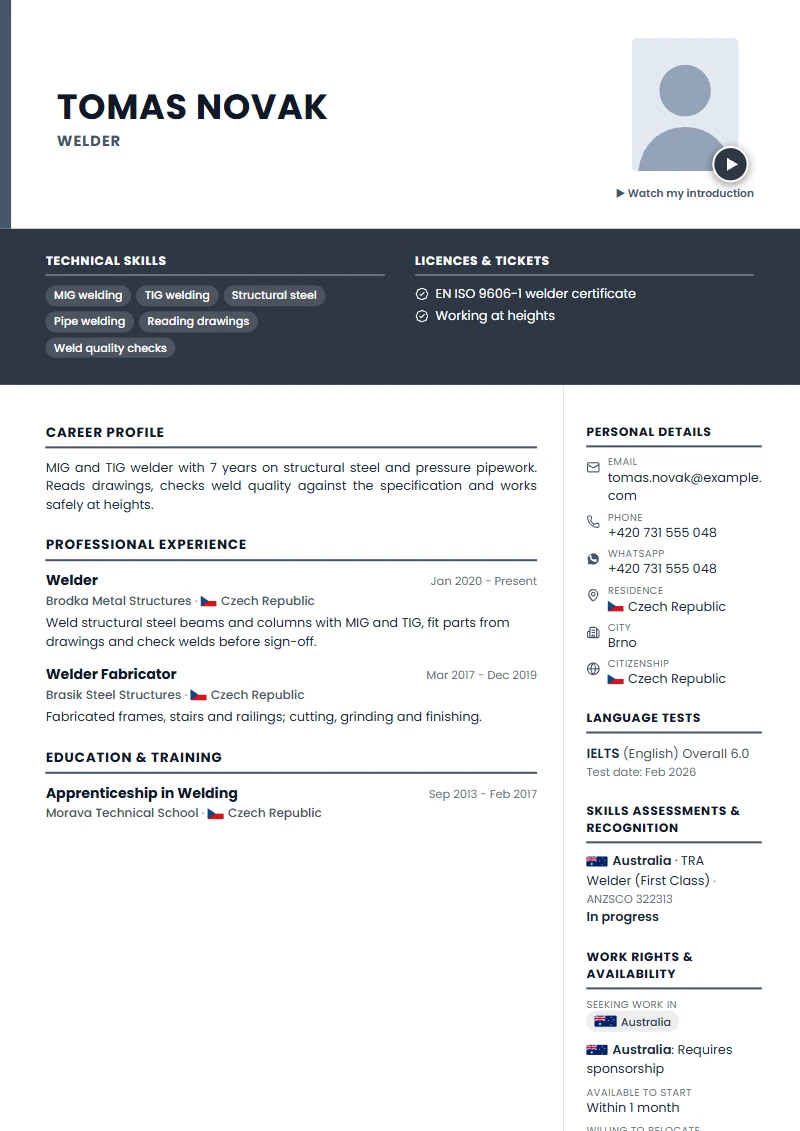
- Don't use images.
- Keep the formatting simple and consistent, so an ATS can read it.
- Send a PDF unless the employer asks for a Word document.
- Use your name and "CV" in the file name, for example firstname-lastname-CV.pdf.
What to include
- Name and contact details at the top, with a professional email address. You can add a LinkedIn link.
- Personal statement: a short summary of who you are, your skills and experience, your career goals and why you want this job.
- Key skills and experience: skill statements that match the job ad and show where you used each skill and what the result was.
- Work history, most recent first: the employer, your job title, where the job was, and your start and end dates. Include workplace training and volunteer work.
- Education and qualifications, most recent or most relevant first: the course, the provider, where you studied and the dates.
- Interests (optional): only ones that show skills employers want, such as leadership.
- Referees (see below).
What to leave out
- Images, including a photo. The government careers site Tahatū says not to use images in your CV.
- Your age and marital status. The Human Rights Commission says you shouldn't be asked these questions when you apply for a job.
- Photos: the law does not stop an employer asking for a photo, but a photo must not be used to avoid interviewing someone because of their sex, age, ethnicity or another protected ground. So leave it out unless the employer asks for one.
Your right to work (general information only)
Employers must make sure that anyone they hire is legally allowed to work for them in New Zealand.
An employer may ask whether you are entitled to work in New Zealand, but they should not ask about your country of origin.
For visa questions, use the official Immigration New Zealand website.
CV tip: Our suggestion, not an official rule: add one honest line, such as "NZ resident" or a short note about your visa situation.
Overseas qualifications and NZ registration
NZQA can compare an overseas tertiary or vocational qualification with New Zealand qualifications (an International Qualification Assessment). Check with the employer or organisation whether you need one.
Some jobs in New Zealand need registration with a registration authority. Immigration New Zealand says to start the registration process as soon as possible, because you need it before you apply for a visa to work in one of these jobs.
- Nurses: register with the Nursing Council of New Zealand. Nurses with a current practising certificate in Australia have a separate route.
- Electrical workers: you need New Zealand registration with the Electrical Workers Registration Board (EWRB) to carry out electrical work. There is a separate route for people registered in Australia.
- Plumbers, gasfitters and drainlayers: you need to register and get a licence. The board says doing restricted plumbing, gasfitting or drainlaying work without a current New Zealand licence is illegal.
CV tip: Show your registration status on your CV, for example "NZ registration: applied, [month year]". Write your original qualification name and, if you have one, your NZQA result next to it.
English and driver licences
- Some visas need evidence that you can speak and understand English. Check the Immigration New Zealand website for the visa you want.
- You may be able to convert a valid overseas driver licence to a New Zealand licence. The steps depend on the country that issued it, and truck licences have their own rules.
CV tip: List your licence class exactly as it is on your licence, the country that issued it, and the vehicle types you have driven.
Referees
- If the job ad asks for referees, give contact details for at least 2. If you have work experience, one should be a current or former manager or supervisor.
- If the ad doesn't ask, write "Referees available on request" and share them if you get an interview.
- Ask your referees first, so they know to expect a call.
- Employers should only contact the referees you give them. If they want to speak to your current employer and you haven't named them, they must ask your permission first.
Cover letter and final checks
- Write a new cover letter for each job and keep it to 1 page.
- Address it to the contact person in the job ad. If there is no name, use "Dear hiring manager" or "Kia ora".
- Send it as a PDF unless the employer asks for Word.
- Explain any big gaps in your work history in the cover letter.
- Proofread your CV carefully and ask someone else to check it too.
- If you use AI tools, check, personalise and edit what they write.