 Build AI CV
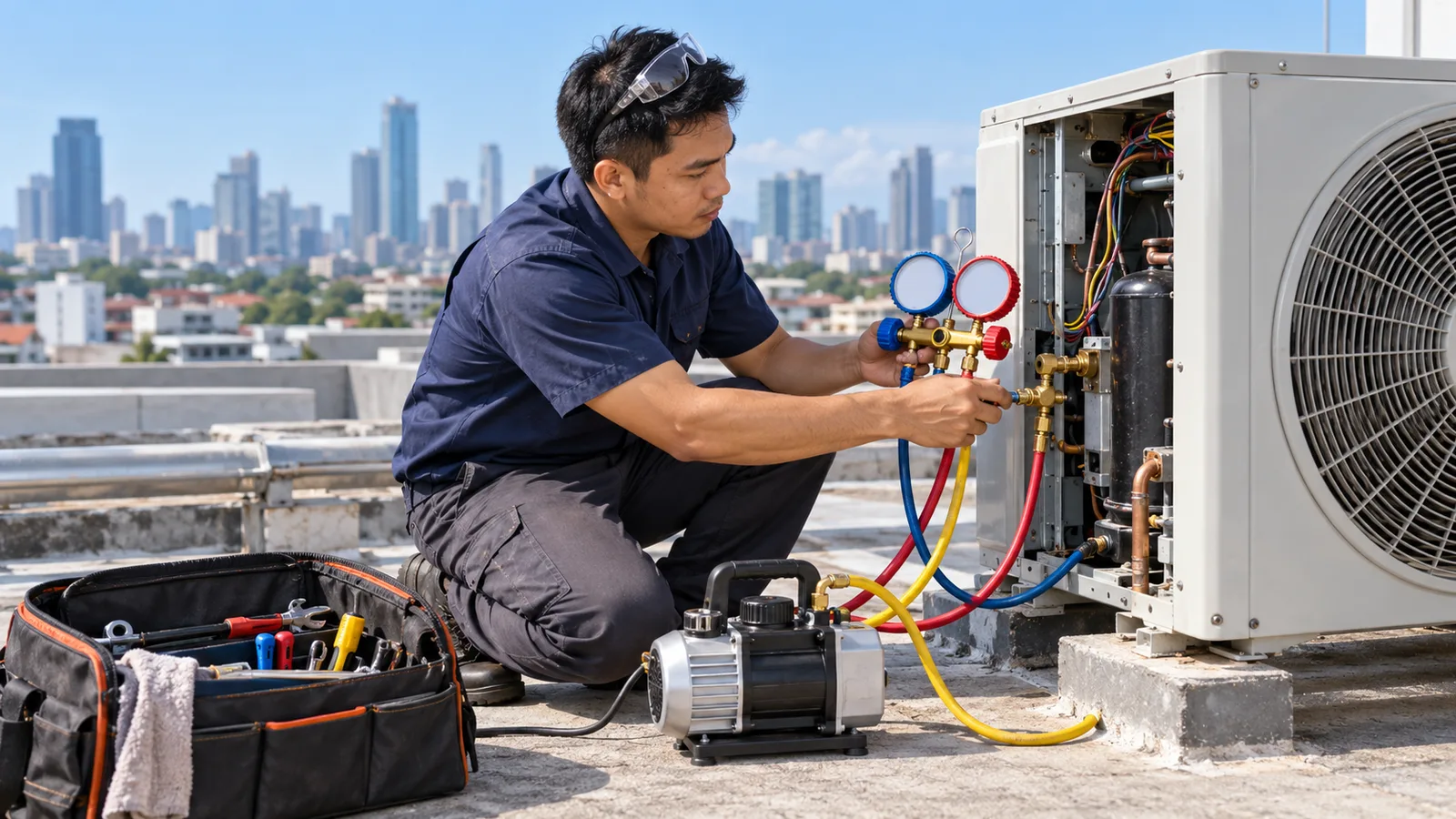
If you work on refrigeration and air-conditioning systems, the person reading your resume wants three answers fast: are you licensed to handle refrigerant, which systems have you worked on, and can you work on their equipment from day one. A resume that answers all three with "HVAC maintenance and repairs" is easy to skip, and the job often goes to the applicant whose licence and system list are on page one. This article shows you how to set out a refrigeration mechanic resume, or an HVAC technician CV, so those answers sit at the top, with example lines you can adapt.
Why refrigeration and HVAC resumes get passed over
Most resumes in this trade list the same duties: install, service, maintain, repair. They are true, and say almost nothing. A supermarket service contract, a cold-storage warehouse and a new office building need three different people: one with cool room and breakdown experience, one with ammonia or CO2 plant experience, one with VRF commissioning and controls.
When the resume does not name the systems, the reader has to guess, and a busy reader rarely guesses in your favour. The fix is the right nouns: licence names, system types, refrigerants, brands and tools.
Refrigeration mechanic, HVAC technician or RAC engineer?
The same trade has different names. In Australia and New Zealand you will often see "refrigeration and air-conditioning mechanic". In the UK the usual title is "refrigeration and air conditioning engineer" or "RAC engineer". In the United States and Canada, "HVAC technician" or "HVACR technician" is common. Use the job ad's title in the target job line, and keep your real titles in your work history.
Licences: the lines hiring managers look for first
In this trade there are usually two kinds of proof. The first is your trade qualification: the certificate, apprenticeship or diploma that says you trained as a refrigeration mechanic. The second is a licence or certificate to work with refrigerant gases. Many employers check the second one first, because in many countries the work cannot legally be done without it.
Refrigerant licences and certifications
Each country has its own rules, so check the official page for the country you are applying to. Three examples:
- Australia: the government's refrigeration and air conditioning page explains that a Refrigerant Handling Licence is needed to handle these gases or work on equipment that contains them, and that the Australian Refrigeration Council administers the licences.
- United Kingdom: the guidance on qualifications to work with F gas says you must hold your own qualifications to work on equipment containing F gas, even if you work for someone else.
- United States: the EPA's Section 608 technician certification page says technicians who maintain, service, repair or dispose of equipment that could release ozone-depleting refrigerants must be certified.
Rules change and differ by state and type of work. Your resume does not need to explain the law; it needs to show clearly what you hold.
How to write the licence line
Write each licence on its own line, in the same order every time:
- The licence or certificate name, exactly as it is printed on the card.
- The type, class or category, also as printed.
- The country, state or issuing body.
- The expiry date, if it has one.
- The licence number, or "number available on request" if you prefer not to print it.
Example (fictional):
- Refrigerant Handling Licence, Australia: [type as printed on your card], expires March 2028
- F gas qualification, UK: [category as shown on your certificate], issued 2023
- EPA Section 608 certification, United States: [certification type shown on your card]
Never list a licence you do not hold, or upgrade its type: a wrong line can cost you the offer even after a good interview. If you have applied for one, write "Application lodged, awaiting outcome".
Electrical licences and other tickets
A lot of refrigeration work involves wiring, controls and fault-finding on live circuits. If your country has a separate electrical licence, or a restricted licence for disconnecting and reconnecting equipment, list it with the same detail as your refrigerant licence. If you hold a full electrical licence as well, the way an electrician CV example sets out licence classes and fault-finding skills is a useful model.
Then add tickets that often appear in HVAC job ads: working at heights, confined spaces, first aid, and your driver licence if the job includes a service van.
Name the systems, refrigerants and brands you know
This is the part most refrigeration resumes skip. A short trade snapshot near the top, before your work history, shows in seconds whether you fit this job.
System types
List the systems you have actually installed, serviced or repaired. Group them so they are easy to scan:
- Air conditioning: wall splits, multi-head, ducted, VRF or VRV, packaged units, heat pumps.
- Commercial refrigeration: cool rooms, freezer rooms, display cases, ice machines, walk-in coolers.
- Large plant: chillers, cooling towers, air handling units, industrial ammonia systems, CO2 transcritical racks.
- Transport: truck, trailer and container units.
Refrigerants
Name the refrigerants you have charged, recovered or worked with, for example R32, R410A, R134a, R404A, R744 (CO2), R717 (ammonia) or R290. Natural and flammable refrigerants need different skills and safety training, so if you have that experience, write it plainly rather than hiding it inside "all refrigerants".
Brands, controls and tools
Write the makes of equipment you have installed or serviced, spelled as they appear on the unit, plus any controllers or building management systems you have fault-found. Then list your tools: digital manifold gauges, micron gauges, vacuum pumps, recovery units, leak detectors and any service software. The same idea is covered in more depth for engines and machines in the post on what workshop managers look for in a diesel mechanic resume.
Build AI CV has a field for HVAC brands, picked from a searchable list, and fields for the tools and software you have used.
Turn duties into proof in your work history
Under each job, write three to six lines. Each line says what you worked on, what you did, and how big the job was or what the result was. Honest numbers help: sites, units, storeys.
Weak lines and stronger versions
Example (fictional):
- Weak: "Responsible for HVAC maintenance." Stronger: "Serviced about 40 split and ducted systems a month across 12 retail sites, including leak tests, refrigerant recovery and logbook records."
- Weak: "Installed air conditioners." Stronger: "Installed and commissioned VRF systems on a six-storey office fit-out, working with the electrical contractor on controls and handover."
- Weak: "Did breakdowns." Stronger: "Took after-hours breakdown calls for cool rooms and freezer rooms at supermarkets and restaurants, finding faults and restoring temperature before stock was lost."
Show the paperwork too
If you kept refrigerant logbooks, leak test records, recovery records or service reports, say so in one line. It shows you understand compliance, which matters to any contractor who answers to clients and regulators.
A resume layout that puts the licence where it is seen
For most refrigeration and HVAC jobs, this order works well:
- Name, contact details and target job title, matching the ad.
- Career profile: three or four lines.
- Licences and certificates.
- Trade snapshot: systems, refrigerants, brands and tools.
- Work history, most recent first.
- Trade qualification and training courses.
- For jobs abroad: work rights, skills assessment and English test results.
Example career profile
Example (fictional): Refrigeration and air-conditioning mechanic with 8 years in commercial refrigeration and split and ducted systems. Holds a refrigerant handling licence and a completed trade certificate. Experienced in cool room and freezer room breakdowns, VRF commissioning and planned maintenance contracts, with accurate logbook and service records.
The Technical / Trades template in Build AI CV shows skills, licences, tools and brand experience in a snapshot panel up front. It is a Pro template, so anyone can preview it, but downloading a CV in it needs an active Pro Pass; Classic and ATS Plain are the free templates. You can see the layout on the Technical / Trades template page, and the CV examples for skilled trades show how electricians, automotive technicians and other trades set out licences and duties.
Applying abroad as a refrigeration mechanic
A refrigerant licence from one country usually does not let you work in another. Read the official page for the country you are targeting, and list the licences you hold now with the country next to each. If you have started a local licence application or a skills assessment, add it with its status, and only if it is true. The post on where a skills assessment belongs on your resume shows how to set that out.
Employers hiring from overseas cannot see you on site, so proof of real work helps. Clear photos of tidy pipework or a finished plant room can do that; the post on which work photos help a trade CV covers what to include and what to leave out. A verified profile on Talent Tabloid is another way to show your skills and work history in one place, and a short self-introduction video recorded with SelfIntroVideo lets an employer hear how you explain your work.
Checklist before you send it
- The job title at the top matches the ad.
- Every licence is named exactly as printed, with type, country and expiry date.
- Your trade snapshot lists systems, refrigerants, brands and tools you have really worked with.
- Each job has three to six lines that show what you did and how big the work was.
- For jobs abroad, your licence country and any applications in progress are clear.
- The file is a PDF with a plain name, such as "Firstname-Lastname-Refrigeration-Mechanic.pdf".
When your licence lines and trade snapshot are ready, you can build your CV free in the editor. You can start a CV as a guest in Build AI CV; to save it online, use the AI features or download a PDF, you need a free account.
Frequently asked questions
Should I write refrigeration mechanic or HVAC technician on my resume?
Use the title in the job ad for your target job line, because that is the word the employer is searching for. Keep your real past titles in your work history.
Where does the refrigerant licence go on an HVAC technician CV?
Near the top, straight after your career profile, in its own "Licences and certificates" section.
Should I print my licence number?
Either is fine. Otherwise write "number available on request" and keep the card ready.
How long should a refrigeration mechanic resume be?
Two pages is enough for most technicians. Shorten jobs older than ten years to one or two lines.
Can I list a licence I am still applying for?
Yes, if you say so clearly, for example "Application lodged, awaiting outcome". Never write it as if you already hold it.


